Updated November 2026
Short on time? Here is the answer. Most people should buy the Manduka PRO. It is 6mm thick, dense enough to protect knees without wobbling, and built to last for years instead of seasons. If your hands slip in Downward Dog, get the JadeYoga Harmony instead. If money is tight, the IUGA TPE mat gives you a full size 6mm mat for a fraction of the price. The other four picks below cover beginners, sore knees, travel and sweaty palms.
Every mat on this list was chosen because real practitioners keep recommending it, not because a brand paid for placement. Specs are listed as plain facts under each pick so you can compare without digging through product pages.
Quick Picks: The 7 Best Yoga Mats Compared
| Mat | Best For | Thickness | Price |
|---|---|---|---|
| Manduka PRO | Best Overall | 6mm | $144 |
| JadeYoga Harmony | Best Grip | 4.7mm | See price on Amazon |
| IUGA Yoga Mat (TPE) | Best Budget | 6mm | See price on Amazon |
| Gaiam Premium 6mm Alignment Print | Best for Beginners | 6mm | See price on Amazon |
| ProsourceFit Extra Thick 1/2 Inch | Best for Bad Knees | 13mm | See price on Amazon |
| Manduka eKO SuperLite | Best Travel | 1.5mm | See price on Amazon |
| Hugger Mugger Para Rubber | Best for Sweaty Hands | 6mm | See price on Amazon |
1. Manduka PRO: Best Overall
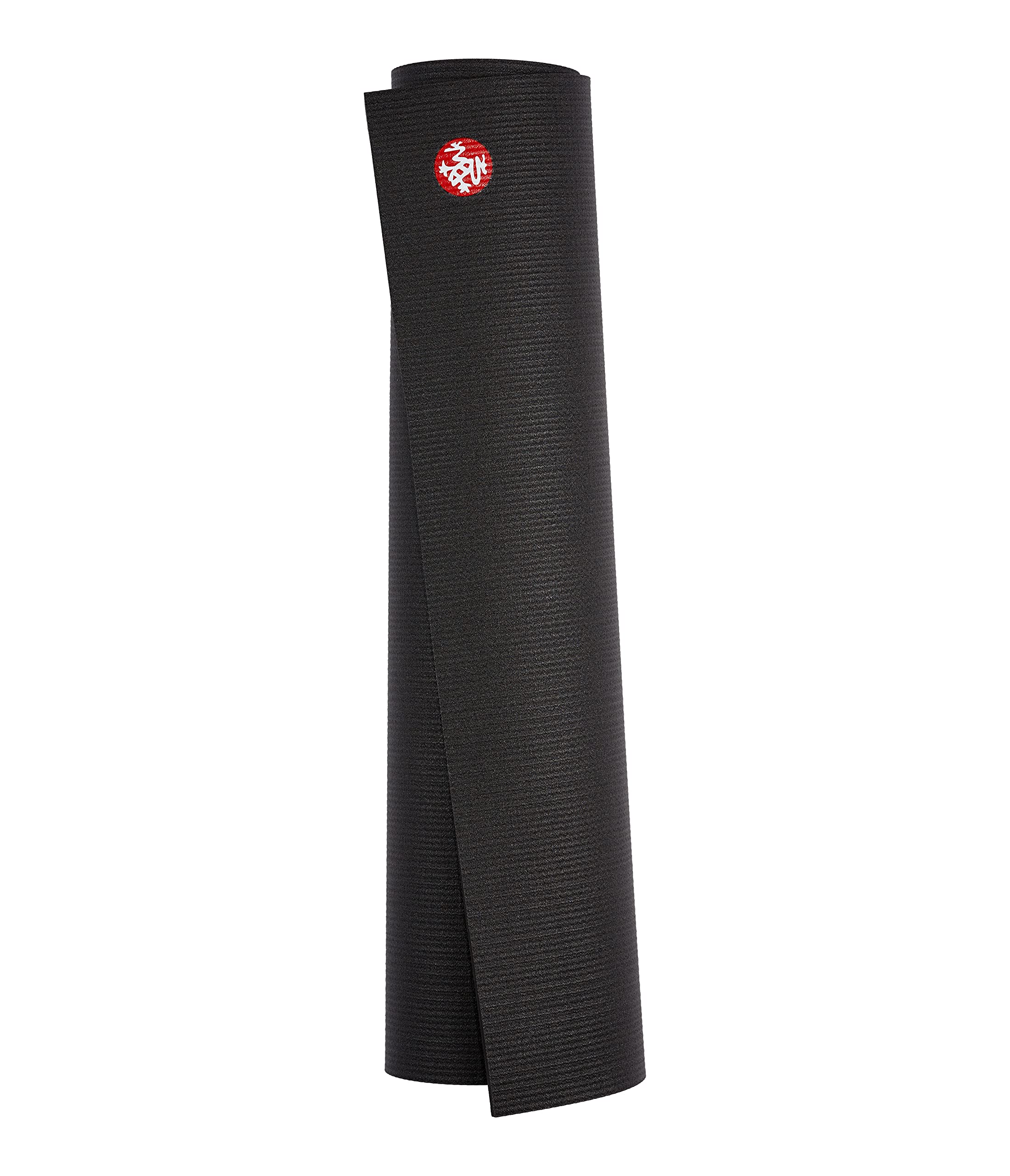
- Thickness: 6mm
- Material: PVC (OEKO-TEX certified)
- Size: 71 x 26 inches
- Weight: 7.5 lbs
The Manduka PRO is the mat teachers roll out for a decade and then keep using. The 6mm PVC is unusually dense, so your knees and elbows get real padding while standing poses still feel planted instead of spongy. At 71 x 26 inches it is longer and wider than a standard mat, which taller practitioners notice right away. Manduka backs it with a lifetime guarantee, and the closed cell surface does not soak up sweat or bacteria the way open cell rubber can.
The trade offs are honest ones. At 7.5 lbs it is a home or studio mat, not something you want to carry across town every day. New PRO mats also have a factory film that feels slippery at first. Manduka tells buyers to do a coarse sea salt scrub and a few weeks of practice to break it in, and that advice is worth following before you judge the grip.
Pros
- Dense 6mm cushion that still feels stable in balance poses
- Lifetime guarantee, one of the few mats sold as a buy it once purchase
- Extra long and wide at 71 x 26 inches
Cons
- Heavy at 7.5 lbs, poor choice for commuting to class
- Slippery until the break in period is done
2. JadeYoga Harmony: Best Grip
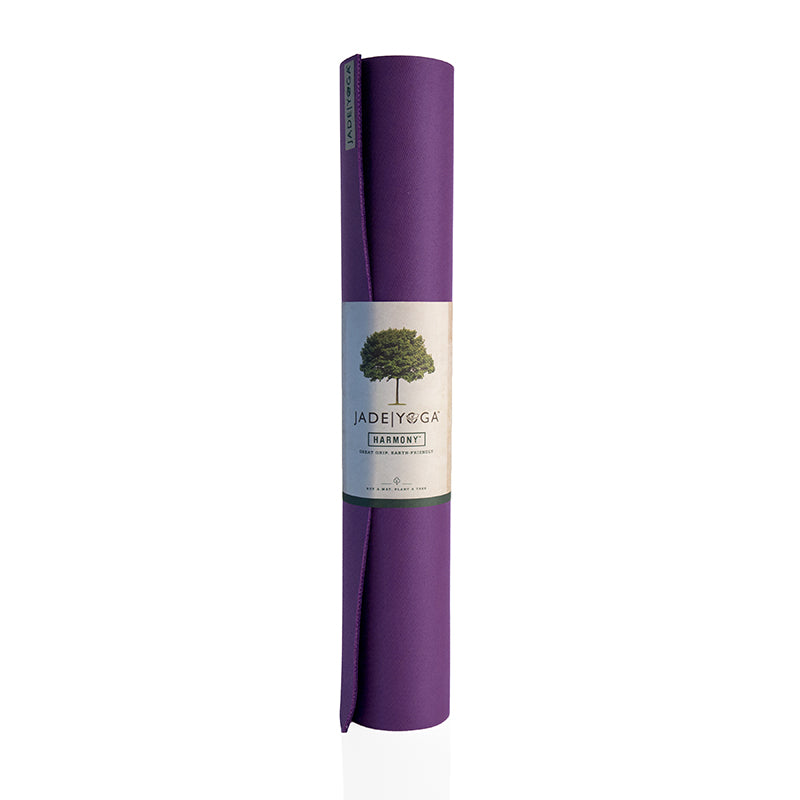
- Thickness: 4.7mm (3/16 inch)
- Material: Natural rubber
- Size: 68 x 24 inches
- Weight: 4.2 lbs
If slipping is your main complaint, the Harmony is the fix most often named by r/yoga regulars. Natural rubber has an open cell structure that grabs palms and heels, and the grip actually improves as your hands start to sweat instead of giving up. At 4.7mm it sits in the sweet spot: enough padding for floor work, firm enough for standing sequences. JadeYoga makes the mats in the USA and plants a tree for every mat sold.
Rubber asks for a little care in return. Keep it out of direct sunlight, because UV breaks rubber down, and expect a natural rubber smell for the first days. Anyone with a latex sensitivity should skip it entirely and look at the Manduka PRO or the IUGA below.
Pros
- Outstanding grip that holds in sweaty practices
- Natural rubber, no PVC, and a tree planted per mat
- Balanced 4.7mm thickness for mixed styles
Cons
- Open cell rubber wears faster than dense PVC
- Not suitable for latex allergies and needs shade storage
3. IUGA Yoga Mat (TPE): Best Budget
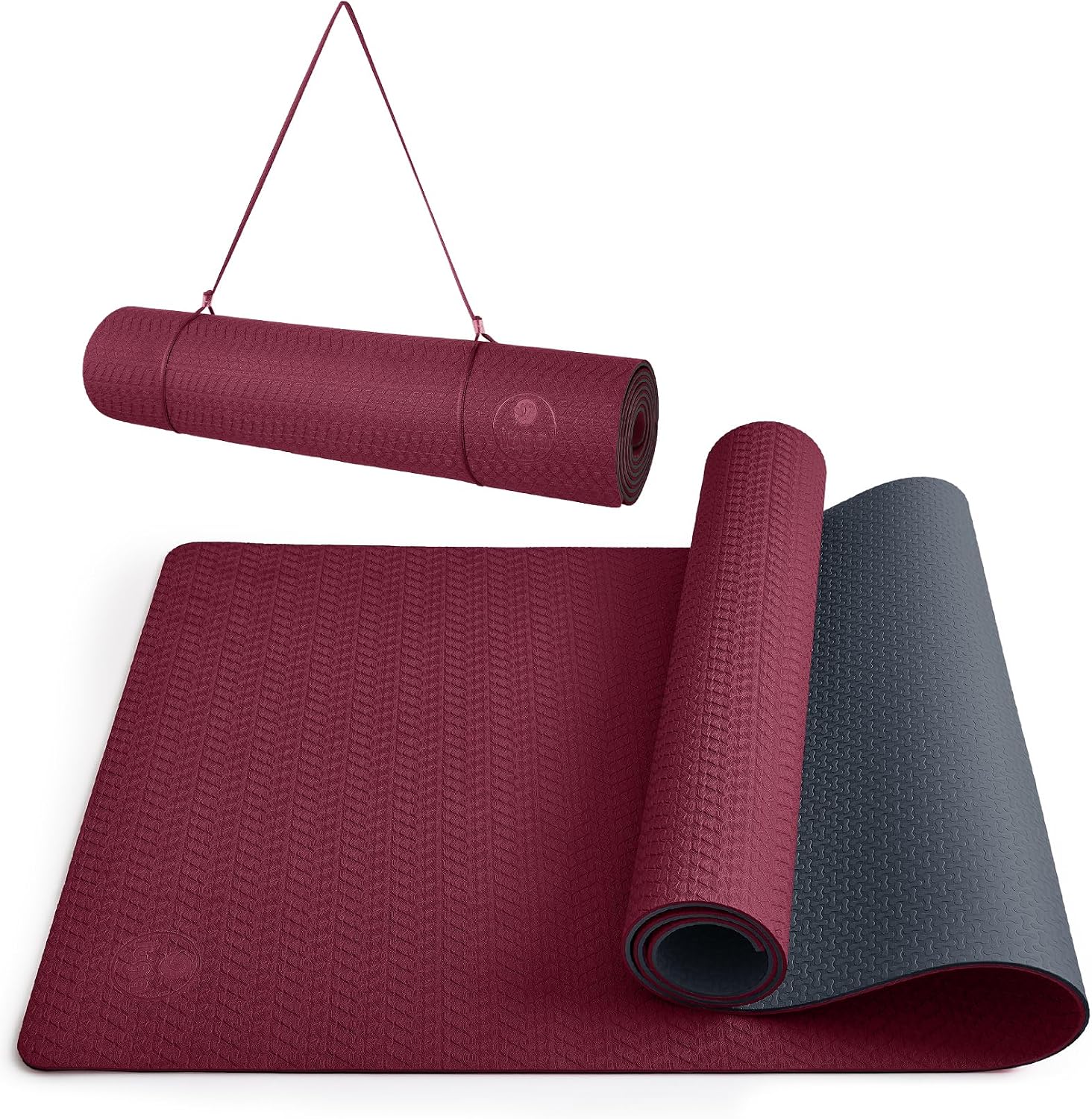
- Thickness: 6mm
- Material: TPE (thermoplastic elastomer)
- Size: 72 x 24 inches
- Weight: 2 lbs
The IUGA is the mat to buy when you want to start a home practice this week without spending premium money. It is a full size 72 x 24 inch mat, 6mm thick, and it weighs only 2 lbs, so moving it around the house is effortless. The two sides have different textures and different colors, one grippier side for practice and a ribbed side that holds the floor. A carry strap is included in the box, which budget mats often make you buy separately.
TPE is a compromise material and it behaves like one. It is lighter and cheaper than rubber or dense PVC, but it will not survive years of daily vinyasa the way the Manduka PRO will, and very sweaty hands can still skate on it during hot classes. For beginners, stretching routines and gentle flows, it is hard to beat for the money.
Pros
- Very light at 2 lbs with a carry strap included
- Reversible two texture design, two colors in one mat
- Costs a fraction of the premium rubber mats
Cons
- TPE wears out sooner than rubber or PVC
- Grip gives up in heavy sweat and hot yoga
4. Gaiam Premium 6mm Alignment Print: Best for Beginners
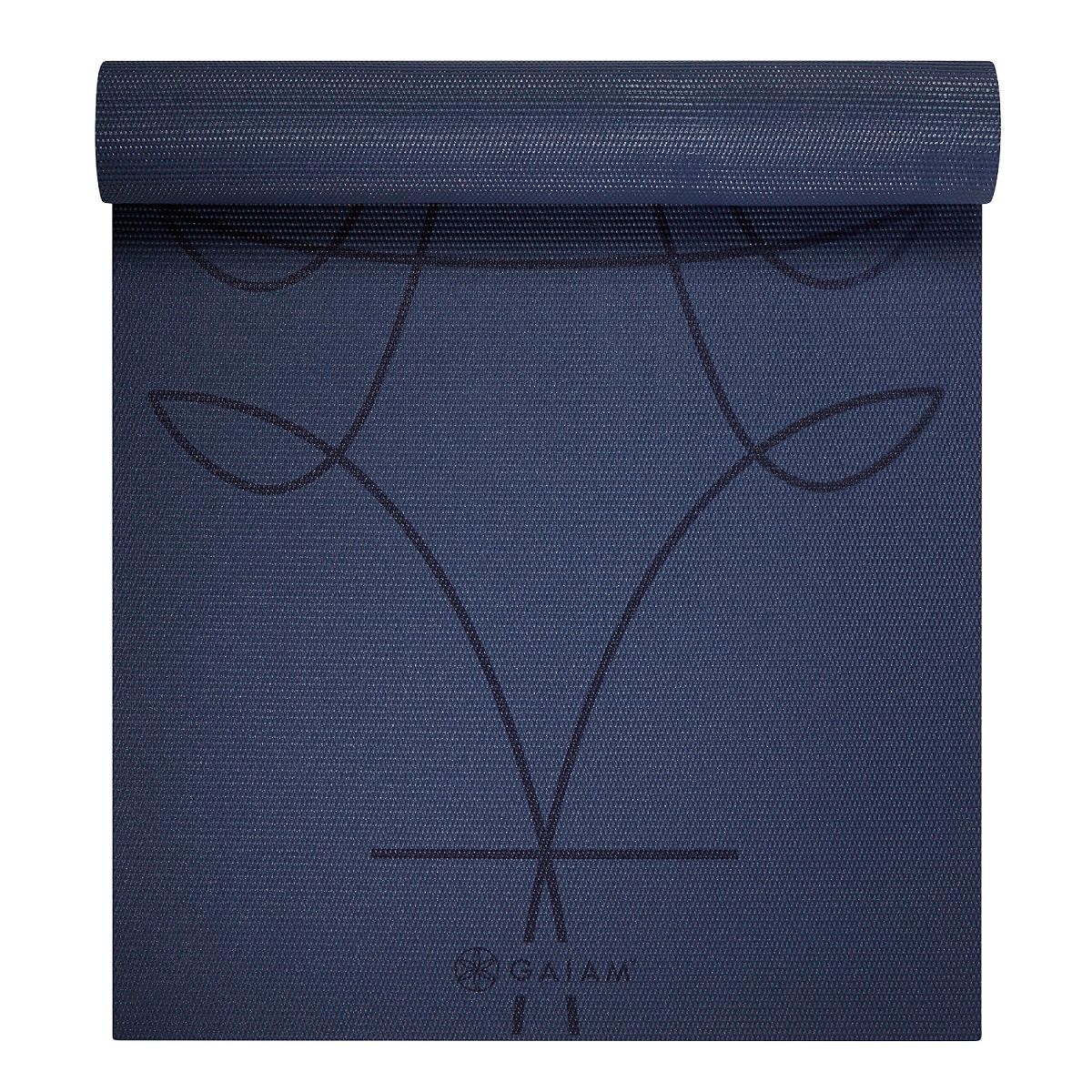
- Thickness: 6mm
- Material: PVC
- Size: 68 x 24 inches
- Weight: 3.1 lbs
New practitioners usually have two problems: sore knees and no idea where their hands and feet should land. This Gaiam mat answers both. The 6mm padding is forgiving on joints, and the printed alignment design gives you visual reference points for hand and foot placement while you are still learning the shapes. The surface has a tacky, textured finish that works well for slow and moderate paced classes, and at 3.1 lbs it is easy to carry to a studio.
It is a starter mat, not a forever mat. The print can fade with heavy use, the grip is not built for hot yoga, and PVC is the least eco friendly material on this list. Treat it as the mat you learn on for your first year or two, then upgrade once you know your style.
Pros
- Printed alignment guides help beginners place hands and feet
- Soft 6mm cushion at a light 3.1 lbs
- One of the most affordable brand name mats
Cons
- Print fades over time and grip drops when wet
- PVC material is not an eco friendly choice
5. ProsourceFit Extra Thick 1/2 Inch: Best for Bad Knees
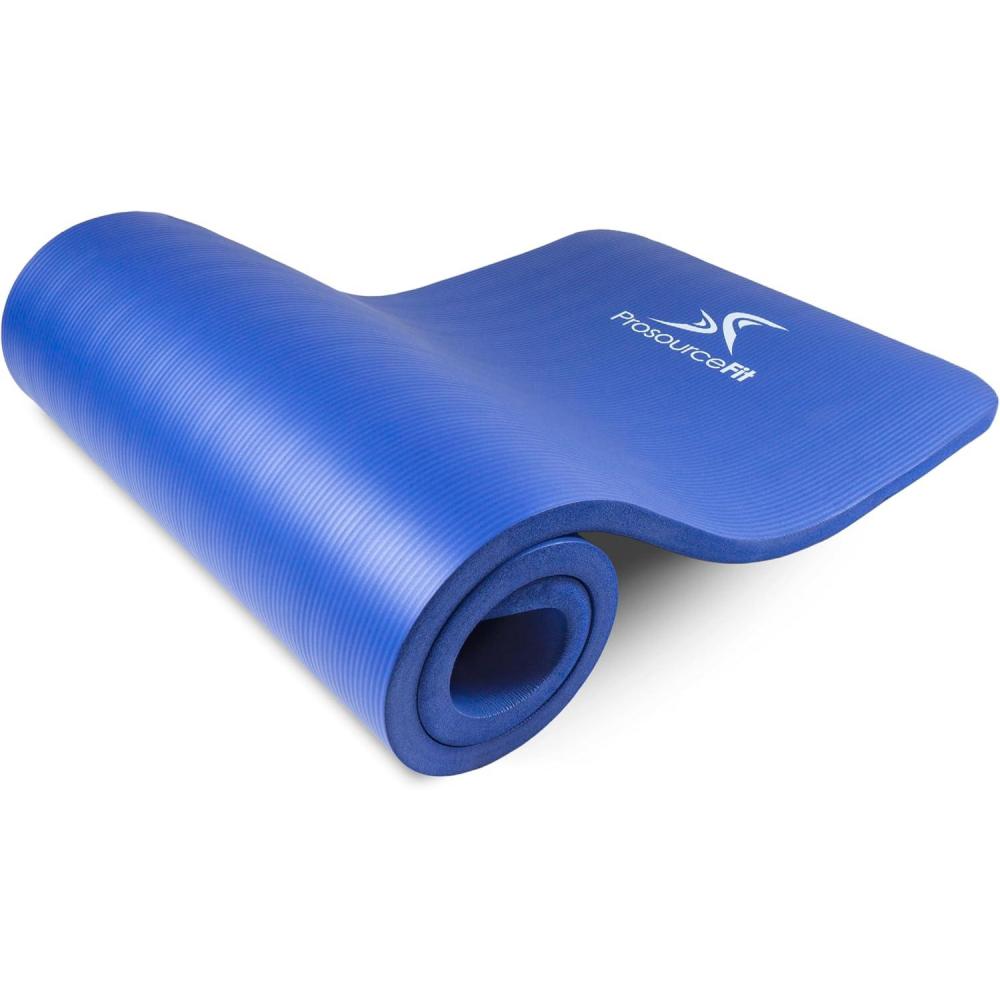
- Thickness: 13mm (1/2 inch)
- Material: NBR foam
- Size: 71 x 24 inches
- Weight: About 2.6 lbs
When kneeling poses hurt, thickness beats everything else, and nothing on this list comes close to 13mm of foam. The ProsourceFit Extra Thick puts a full half inch of high density NBR foam between your joints and the floor, which is why it keeps showing up in recommendations for sensitive knees, elbows and hips. It is 71 inches long, wipes clean easily because NBR resists moisture, and it ships with a carrying strap despite the low price.
Know what you are giving up. A mat this soft is unstable for standing balance work, since your feet sink and wobble, and wrists can bend at awkward angles in Plank. NBR foam can also take permanent dents where bony joints press into it over months. Use it as a joint friendly mat for floor work, Pilates and restorative practice rather than a power yoga mat.
Pros
- Thickest cushion here at 13mm, genuinely kind to bad knees
- Long 71 inch body and moisture resistant, easy to clean
- Low price with a carrying strap included
Cons
- Too squishy for confident standing balance poses
- Foam can dent and tear sooner than rubber or PVC
6. Manduka eKO SuperLite: Best Travel
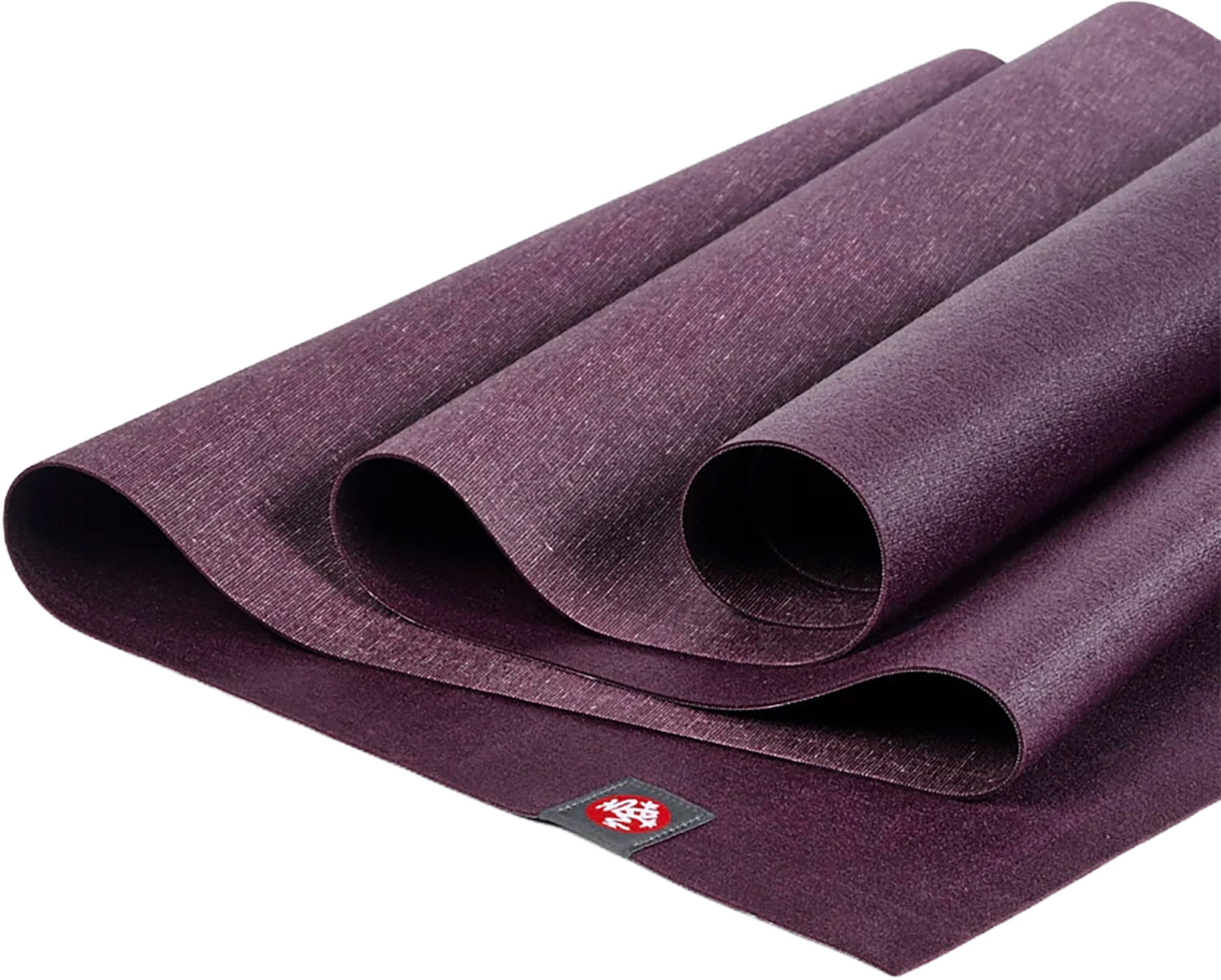
- Thickness: 1.5mm
- Material: Natural tree rubber
- Size: 71 x 24 inches
- Weight: 2.2 lbs
Most travel mats are just thin foam that slides around hotel floors. The eKO SuperLite is different because it is real natural rubber, only 1.5mm thin. It folds flat like a towel instead of rolling, so it disappears into a suitcase, and the rubber top layer still grips your hands properly when you practice. At 2.2 lbs it adds almost nothing to a bag, and the full 71 inch length means you are not practicing on a shortened mat.
Thin means thin. There is nearly no joint padding, so most travelers lay it over a studio rental mat or a hotel carpet for cushion and use it as a clean, grippy surface. It also carries the usual natural rubber smell at first and costs more than foam travel mats.
Pros
- Folds flat for suitcases, only 2.2 lbs
- Real rubber grip instead of slippery thin foam
- Full length 71 inches, not a cut down travel size
Cons
- Almost no cushion for knees on hard floors
- Premium price for a 1.5mm mat
7. Hugger Mugger Para Rubber: Best for Sweaty Hands
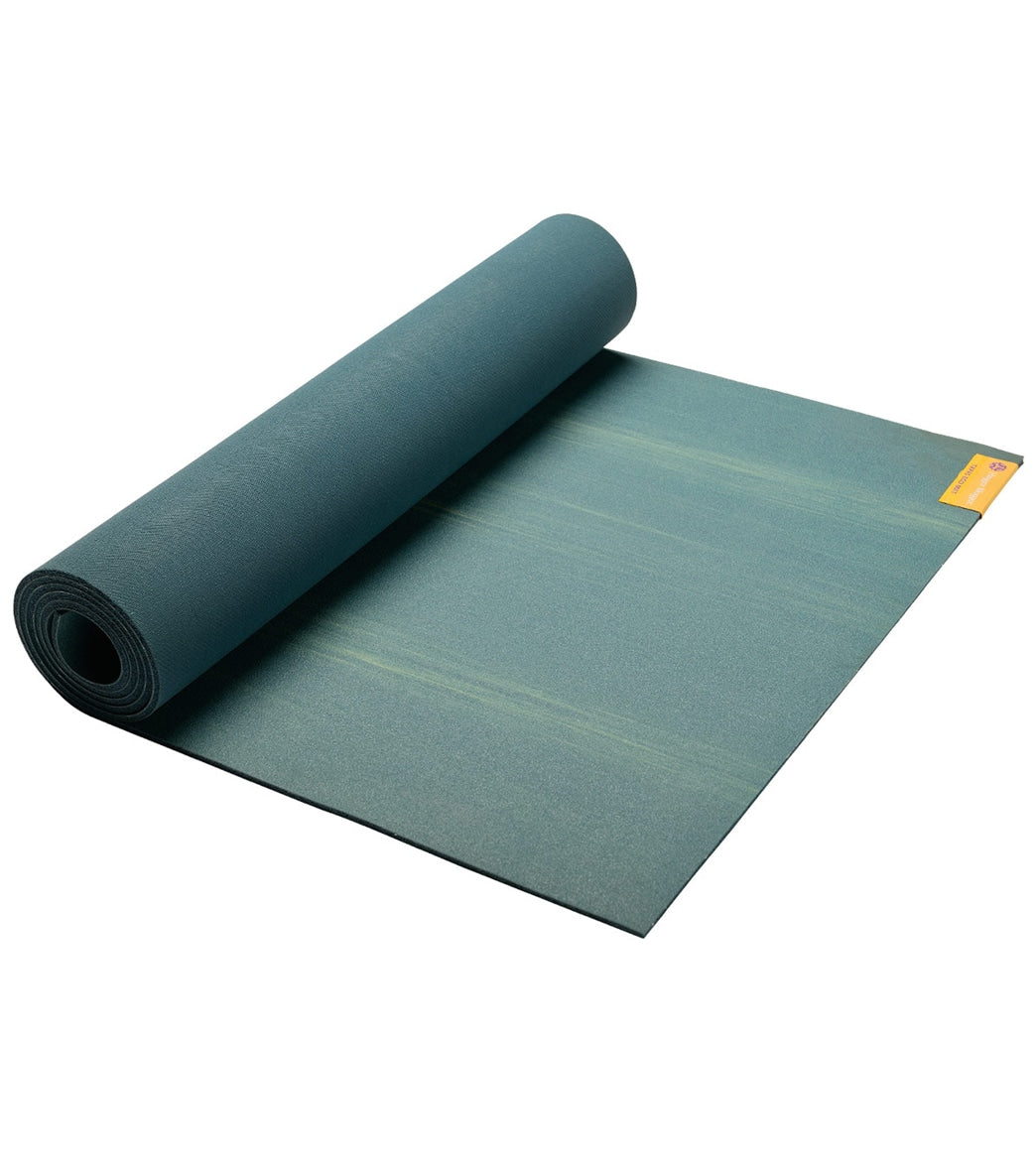
- Thickness: 6mm (1/4 inch)
- Material: Natural rubber
- Size: 70 x 24 inches
- Weight: 6.1 lbs
The Para Rubber is the pick most big roundups skip, and the one yoga teachers have quietly recommended for years. It is natural rubber with two usable sides: a smooth, extra grippy face that holds sweaty palms in heated classes, and a textured flip side for regular practice. At 6mm and 6.1 lbs it is dense and planted, closer to the Manduka PRO in feel than to a typical rubber mat, and the non slip surface works in both directions, hands to mat and mat to floor.
The weight is the price of that density, so it lives best at home or at one studio. Like all natural rubber it has an initial smell and is off limits for latex sensitive users. If your practice is hot, sweaty and daily, this is the hidden gem of the list.
Pros
- Two grip textures in one mat, both sides usable
- Excellent hold for sweaty hands without a towel
- Dense 6mm build that stays flat and planted
Cons
- Heavy at 6.1 lbs for carrying to class
- Natural rubber smell at first, not for latex allergies
How to Choose the Right Yoga Mat
Start with thickness. Thin mats of 1.5 to 3mm give the best floor feel and balance, and they suit travel and advanced practitioners. The middle ground of 4 to 6mm is where most people should shop, since it pads knees without wobbling. Mats over 8mm, like the 13mm ProsourceFit above, are joint rescue mats for floor work, Pilates and restorative yoga, not for standing balance sequences.
Then pick a material. Natural rubber grips best and gets grippier with sweat, but it is heavy, costs more and is wrong for latex allergies. Dense PVC, like the Manduka PRO, lasts the longest and resists sweat absorption, but it needs a break in period. TPE is light, cheap and PVC free, and it wears out fastest. NBR foam is the softest and thickest option, best for joints and worst for balance.
Check the size against your height. A standard mat is 68 x 24 inches. If you are over 5 foot 9, look for 71 or 72 inch mats like the Manduka PRO, the ProsourceFit or the IUGA, so your head and heels stay on the mat in Savasana.
Match the mat to the room. Hot yoga calls for rubber grip. A home practice on hard floors calls for 6mm or more. A mat that lives in your car or suitcase should be the travel pick, not your daily mat.
Frequently Asked Questions
What thickness yoga mat is best for bad knees?
Choose 6mm at minimum, and go thicker if floor work is most of your practice. The 13mm ProsourceFit Extra Thick gives the most protection on this list, while the 6mm Manduka PRO is the better all rounder because it stays stable in standing poses.
Are natural rubber yoga mats better than PVC?
Neither is better for everyone. Rubber grips better, especially with sweat, and it is made from a renewable material, but it is heavier and wears faster. PVC lasts longer and resists absorbing sweat, but it can feel slippery when new and it is a plastic product.
Why is my new yoga mat slippery?
Most new mats ship with a light factory coating. A salt scrub and a few weeks of regular practice remove it on dense PVC mats like the Manduka PRO. If a budget mat stays slippery after a month of use, the surface texture itself is the limit and a rubber mat is the upgrade.
How long should a yoga mat be?
Your full body should fit on the mat when you lie down. Standard 68 inch mats work for most people up to about 5 foot 9. Taller practitioners should choose a 71 or 72 inch mat.
How often should you replace a yoga mat?
Replace it when the surface starts flaking, the grip is gone even after cleaning, or the padding stays compressed where your knees and hands land. Dense PVC mats can last many years, rubber mats usually give two to four years of regular use, and budget TPE or foam mats often need replacing after a year or two of daily practice.
The Verdict
Buy the Manduka PRO if you want one mat that handles everything and lasts. Buy the JadeYoga Harmony if slipping is ruining your practice. Save money with the IUGA TPE, protect bad knees with the ProsourceFit Extra Thick, learn the basics on the Gaiam Alignment Print, travel with the eKO SuperLite, and look at the Hugger Mugger Para Rubber if your hands sweat through every other mat you have tried. Any of the seven beats the thin studio rental you have been borrowing.
Pair your mat with our guides to the best walking pads and best exercise bikes for a complete home setup.